Roman Brick
Some Things Do Last Forever

A month ago, I was in Rome. The architectural history there is so so rich: ancient ruins scattered amongst the pre-war apartment buildings and renaissance monuments. There is so much I could write about its architecture, but I want to focus on the smallest item, the elemental object that makes up these longstanding ruins: the Roman brick.
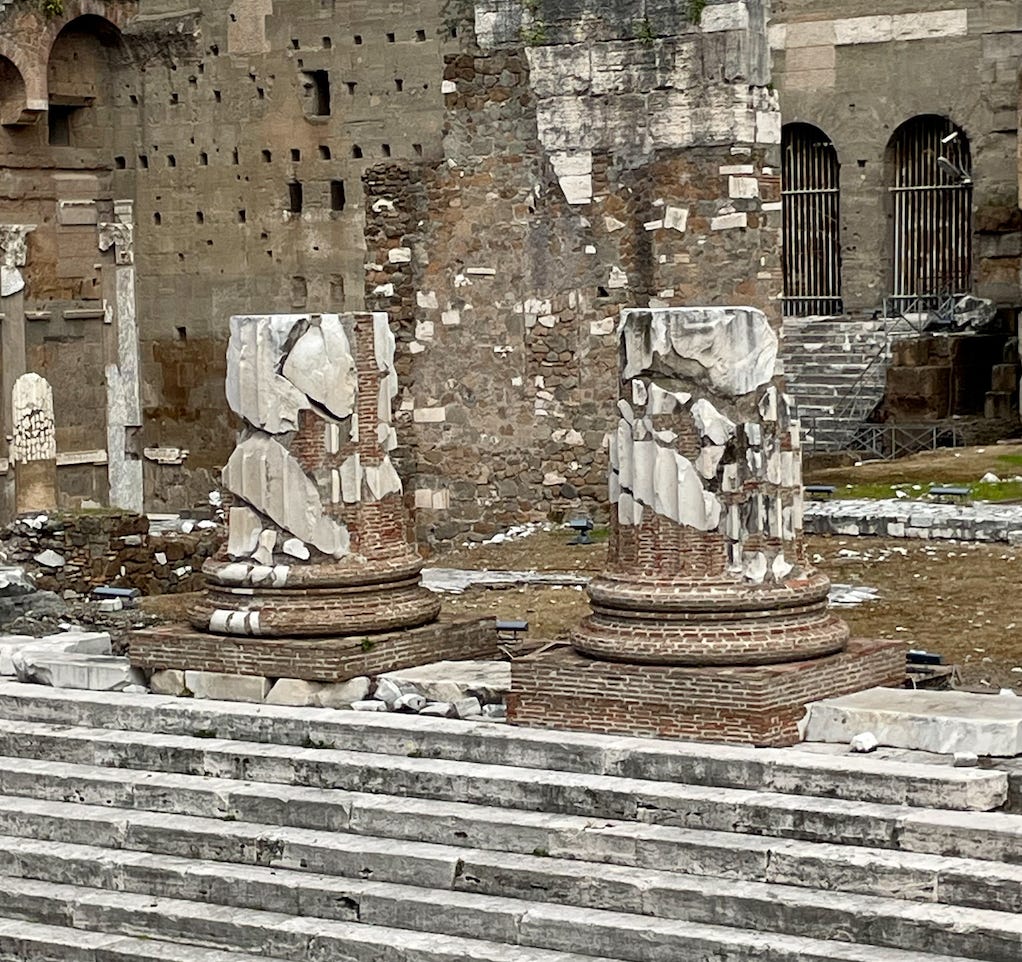
Before my visit, I had pictured ruins made from marble, mostly columns, fallen chunks and broken busts. I was surprised to find a town built around these beautiful brick structures, crumbling elegantly in numerous forms all across the city.
My exploration of this landscape started with a walk that my sister took us on our first morning in the city. She led us past the famous fountains and plazas, through groups of tourists and backgrounds of selfies on sticks. We came upon a large brick edifice, with arches curved in brick the side of the horizontal layers. It looked like a gymnasium, a round basketball court with an addition on the back, light-filled locker rooms and offices for inspirational coaches. This is what I imagined. I would have guessed it was built in the 1500 or 1600s, but this is mostly the furthest back my brick architectural memory expands to.
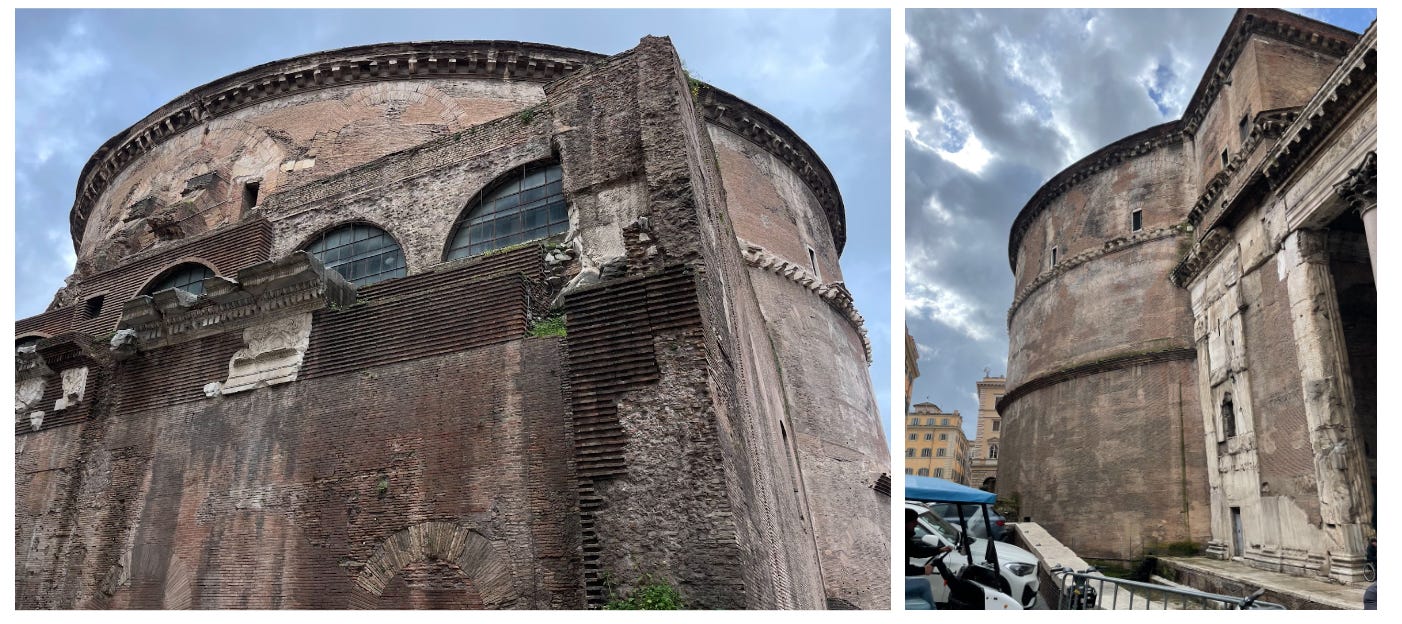
Looking closely at the facade, it seemed like the bricks had previously been covered. There were a few pieces of marble hanging from one corner, but the remainder had been stripped. I caught up with my sister, and realized the bricks I was admiring were the back of the Pantheon, built in 25 BC and reconstructed in 118 AD, famous for its classical columned front and incredible dome within.
I found that the beauty of the Pantheon’s exterior was not in its tall columns and stately front, but rather its old brick backside, covered in moss, embedded arched patterns and striping hidden beneath, slightly dilapidated but completely dynamic. I saw these patterns in other Roman ruins throughout our visit — the Colosseum’s arched doorways and textured horizontal patterning. In the Roman Forum, unidentified structures still stood, imagined lives happening within smaller coves and between textured walls.
Bricks were the chosen building material for the empire, oftentimes hidden below the marble cladding quarried from Tuscany. It was thus not an aesthetic choice, but a structural one. The diversity of brick shape and design were used to empirically engineer arches — a shape the Romans were righteously obsessed with, repeated in arcades, domes, doorways, windows. Not only was the arch an aesthetic choice, but they structurally served to support taller buildings and larger structures by pushing weight both out and down.
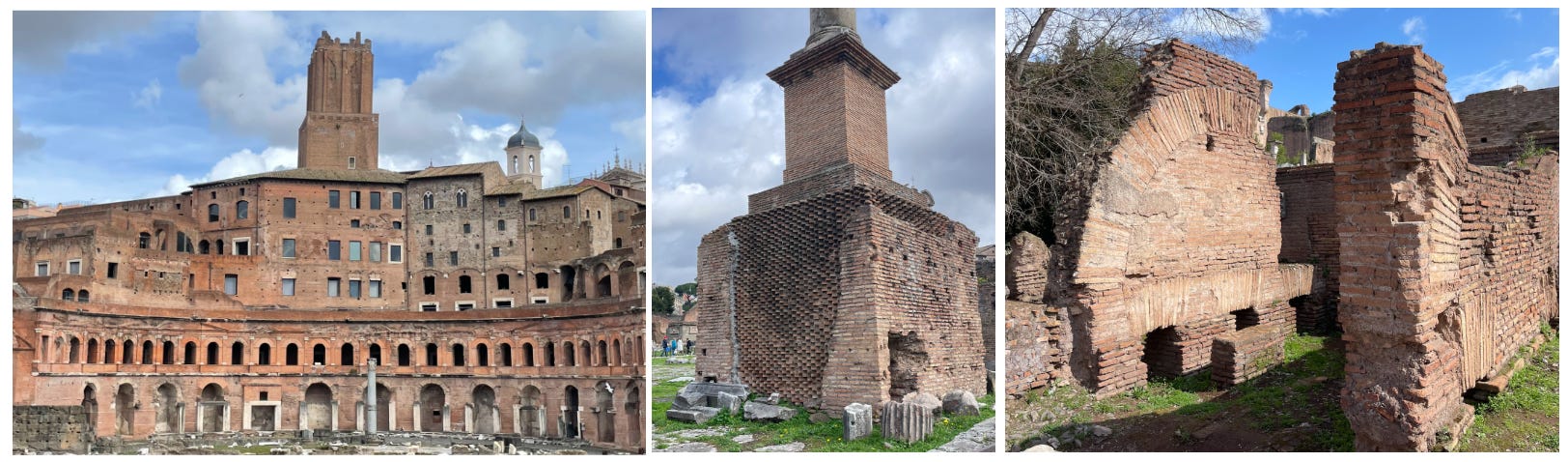
The bricks used in ancient Rome were generally longer and flatter than today’s standard brick, and came in a variety of lengths and sizes.
Although brick construction had previously existed, the Roman empire introduced the kiln-firing process, the earliest example of mass-manufactured and supplied bricks. This technology led to an increase in public buildings in ancient Rome and across the Roman empire with mobile kilns.
As tourists, we aren’t seeing what these ruins would have actually looked like in the building’s heyday, but are lucky enough to witness how they have passed through time, the force of what remains, and the beauty of its engineered form.
The brick seems to be an everlasting element, not only in its physical presence in modern day Rome, but also its influence on global architecture in the past two millennia. Though its marble exterior has fallen, there is immaculate grace in the naked structure that remains, holding the dome of the Pantheon high. Nothing lasts forever, but these bricks might.